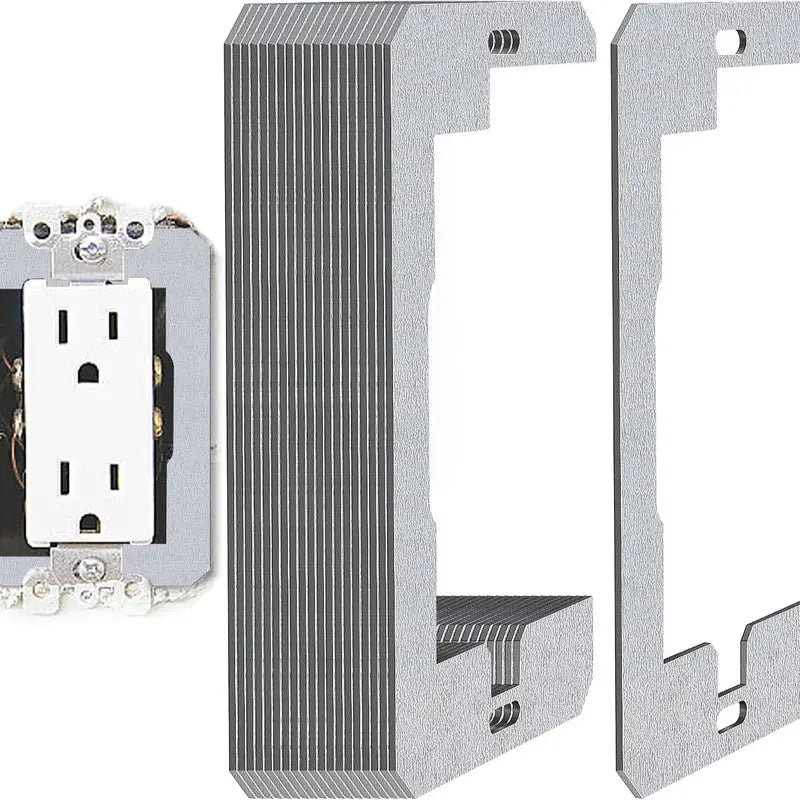
Outlet & Switch Repair Spacers – Fix Loose, Crooked & Recessed Mounting Before It Costs More
BUNDLE & SAVE
Couldn't load pickup availability

Outlet Repair Spacers – Fix Small Outlet Problems Before They Become Expensive Repairs
Before You Call an Electrician, Check the Gap Behind the Outlet.
If an outlet started sitting too deep after tile, backsplash, drywall, or remodeling work, the problem may be the mounting depth — not the outlet itself.
A tiny spacing problem can turn into a service call, extra labor, and a much bigger bill. For the right recessed-outlet issue, this small metal spacer can help you solve the mounting gap faster, with less work and far less expense than turning it into a larger repair.

The Problem Most Homeowners Notice After the Remodel Is Finished
Your new backsplash looks great. The tile is done. The drywall is finished. Then you reinstall the wall plate and notice the outlet is sitting too far back.
It may still work — but every time you plug something in, the device can look recessed, feel unstable, or sit unevenly behind the cover plate.

Don't Turn a Small Gap Into a Big Bill.
When the outlet itself is still good and the issue is simply mounting depth, opening the wall or replacing more parts than necessary can mean extra labor, extra materials, and extra cost.
These spacers are designed for one specific job: filling the missing support behind a compatible recessed outlet or switch so it can sit closer to the finished wall.
Call someone before identifying the real issue
Open or disturb finished wall surfaces
Replace parts that may not be the problem
Pay labor for a small mounting-depth issue
Identify whether the outlet is simply recessed
Add the missing spacing support
Bring the device closer to the finished surface
Restore a cleaner, firmer fit

A Small Outlet Problem Can Still Trigger a Surprisingly Expensive Visit.
In the U.S., the part itself is often not what makes a small electrical repair expensive — labor, minimum service-call charges, permits, access, and wall work can quickly become the bigger part of the bill.
Typical professional outlet-repair pricing can run roughly $60–$250, while electrician service-call fees can be around $100–$200 for the first hour, depending on location and the work required.
That does not mean every recessed outlet needs an electrician or that this spacer replaces professional electrical work. It means that when the outlet is electrically sound and the real issue is only mounting depth, it makes sense to identify the simple problem before paying for a bigger solution.
Schedule a service visit
Wait for an appointment
Pay labor or minimum call-out charges
Risk turning a mounting issue into extra wall work
Identify the mounting-depth problem first
Use a small part designed for the gap
Spend less time on a simple repair
Avoid unnecessary work when the issue is only spacing
U.S. Safety Standards Make One Thing Clear: Know Whether It’s a Mounting Issue or an Electrical Fault.
This is not a government endorsement of the product. These are real federal safety and housing standards that help explain why outlet condition, mounting, and electrical safety should not simply be ignored.
If the device is electrically sound and the issue is simply a recessed, uneven, or poorly supported mounting position, this spacer is designed to address that specific fit problem — helping you avoid unnecessary wall work, wasted time, and a larger repair than the situation may actually require.
Official references:
CPSC.gov
·
HUD NSPIRE
·
HUD HCV
·
USA.gov
Federal agencies cited above do not endorse Ochrelix or this product. Local electrical, permit, landlord, and tenant rules vary.
Especially Useful in Rentals, Older Homes, and Remodeled Properties.
Older houses and rental properties often go through years of repainting, drywall work, backsplash upgrades, tile installation, outlet replacement, and other improvements. The finished wall can move forward while the electrical box stays where it was — leaving the outlet sitting too deep.
For homeowners, landlords, property managers, maintenance teams, and qualified DIY users, keeping a few spacers on hand can make these small mounting-depth problems faster and easier to deal with when they appear.
This Isn't for Every Outlet — It's for This Exact Problem.
That's why the product works best when you recognize the situation immediately.

Rigid Metal Support Where the Gap Is
The metal spacer provides firm, consistent support behind compatible outlets and switches. No complicated mechanism — just the missing spacing needed to improve device positioning.

Simple Process. Electrical Safety Still Comes First.
Power Off
Turn off the correct circuit at the breaker and verify the device is de-energized.
Loosen
Remove the wall plate and carefully loosen the device mounting screws.
Position
Place the spacer where the compatible device needs added mounting support.
Secure
Re-tighten, reinstall the wall plate, and confirm proper alignment.

Before You Install: Keep the Fix Simple — and Safe.
Electrical permitting and licensing rules can vary by state and local jurisdiction. Follow the rules that apply where the property is located.
Review your lease and report the issue to the landlord or property manager first. Get any approval required before modifying an electrical device.
Turn off the correct breaker and verify the outlet or switch is not energized before removing the wall plate or loosening the device.
Stop using the device and contact a qualified electrician when there are signs of an electrical fault.
Quick Questions
Will this fix every loose outlet?
No. It is designed for compatible mounting-depth and support issues. It will not repair damaged wiring, a broken receptacle, overheating, sparking, or other electrical faults.
Why would an outlet suddenly sit too deep?
It commonly becomes noticeable after tile, backsplash, drywall, or remodeling work increases the thickness of the finished wall surface while the electrical box remains farther back.
Is this mainly for homeowners who recently remodeled?
That is one of the clearest use cases, but it may also help with other compatible recessed-device mounting situations where extra spacing support is needed.
Can this save me from replacing the outlet or opening the wall?
If the electrical device is otherwise in good condition and the problem is only compatible mounting depth, the spacer may provide the additional support needed without a larger repair. Electrical faults still require proper professional attention.
Don't Pay for a Bigger Repair Until You Know It Isn't Just the Gap.
If an outlet sits too deep after years of renovations, a backsplash, tile, drywall, or remodeling work, the right spacer can turn a frustrating little problem into a much simpler fix.
Choose the quantity that matches your project.
Aug 7th
Ordered
Aug 8th - Aug 9th
Order Ready
Aug 17th - Aug 19th
Delivered